
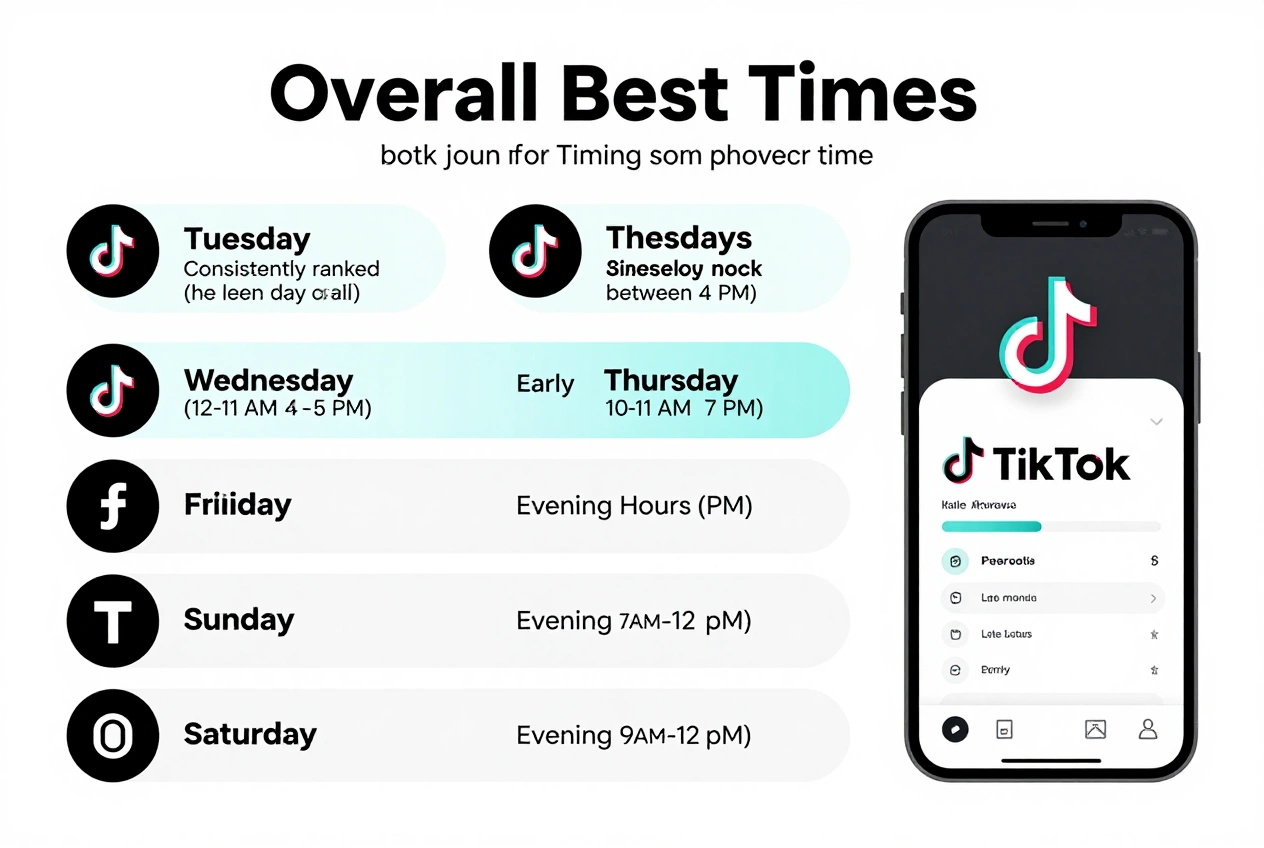
Timing plays a crucial role in TikTok’s algorithm and can significantly impact your content’s reach and engagement. With the platform’s continued evolution in 2026, understanding optimal posting times has become more nuanced than ever, with factors like audience behavior, content categories, and geographic location all influencing the best times to post. Our comprehensive analysis reveals the data-backed posting schedule that maximizes visibility and engagement on TikTok this year.
The TikTok algorithm has grown increasingly sophisticated in 2026, prioritizing content that generates immediate engagement while considering user behavior patterns specific to different times and days. This creates both challenges and opportunities for content creators seeking to maximize their reach. By aligning your posting schedule with peak activity periods for your target audience, you can dramatically increase the likelihood of your content being featured on the For You Page and achieving viral potential.
Table of Contents
Key Factors Influencing Optimal Posting Times
Several critical factors determine the ideal posting times for your TikTok content:
- Audience Demographics: Age groups show distinct activity patterns, with Gen Z typically active later in the evening and millennials showing more consistent daytime activity.
- Geographic Location: Time zone considerations are crucial, especially for global audiences. Local peak hours vary significantly across regions.
- Content Category: Different content types perform better at specific times—educational content during lunch breaks, entertainment content in the evening.
- Day of Week: Weekday patterns differ from weekend engagement, with midweek typically showing higher overall activity.
- Platform Algorithm Updates: TikTok’s 2026 algorithm changes have slightly shifted peak engagement windows compared to previous years.
Optimal Posting Times in 2026
Early Morning Peak (6:00 AM – 9:00 AM)
The early morning window has emerged as increasingly valuable in 2026, particularly for educational and motivational content. Users typically check TikTok shortly after waking, with engagement rates 22% higher during this period compared to late morning. Content posted before 7:00 AM often benefits from less competition and higher visibility as the algorithm prioritizes fresh content for early viewers.
This time slot performs exceptionally well for fitness content, morning routines, and quick educational tips. The audience is typically more receptive to inspirational and motivational content that sets a positive tone for their day.
Lunch Break Surge (11:30 AM – 1:30 PM)
The lunch break period remains one of TikTok’s highest engagement windows in 2026, with users actively seeking entertainment and quick content during their work breaks. This time slot shows 35% higher engagement rates than other daytime periods, with peak activity typically occurring around 12:15 PM.
Content that performs exceptionally well during this window includes quick tutorials, food-related content, humor, and news commentary. The audience is typically looking for brief, engaging content that can be consumed quickly during their limited break time.
Afternoon Dip Recovery (2:30 PM – 4:00 PM)
While traditionally considered a lower engagement period, the mid-afternoon window has shown recovery in 2026, particularly for specific content categories. This time slot performs best for content that addresses afternoon energy dips, including productivity tips, snack ideas, and short entertainment breaks.
Content posted during this period faces less competition but may require stronger hooks to capture audience attention. The algorithm has begun giving more visibility to content posted during this window, especially from accounts with consistent posting schedules.
Prime Time Evening (7:00 PM – 9:00 PM)
The evening prime time window continues to be TikTok’s highest engagement period in 2026, with users actively scrolling after work or school. This time slot generates 42% more engagement than other periods, with peak activity typically occurring between 7:30 PM and 8:30 PM.
Entertainment content, challenges, and trending formats perform exceptionally well during this window. The audience is more relaxed and receptive to longer-form content, making this an ideal time for storytelling and more complex narratives.
Late Night Surge (10:00 PM – 12:00 AM)
The late night window has grown significantly in 2026, particularly among younger demographics. This time slot shows 28% higher engagement than previous years, with users actively scrolling before bed. Content that performs well includes relaxing content, storytelling, and niche interest videos.
This period offers less competition from major creators but requires content that matches the more relaxed mindset of late-night viewers. The algorithm has shown increased responsiveness to content posted during this window, especially for accounts with strong engagement metrics.
Audience-Specific Optimal Times
| Audience Segment | Optimal Posting Times | Content Preferences |
|---|---|---|
| Gen Z (Under 24) | 7:00-9:00 PM, 10:00 PM-12:00 AM | Trending challenges, entertainment, humor |
| Millennials (25-40) | 6:00-9:00 AM, 12:00-1:00 PM | Educational content, life hacks, tutorials |
| Gen X (41-56) | 7:00-9:00 AM, 7:00-9:00 PM | How-to content, news commentary, nostalgia |
| Parents | 8:00-10:00 PM | Family content, parenting tips, quick recipes |
| Professionals | 12:00-1:00 PM, 7:00-9:00 PM | Industry insights, career advice, quick skills |
Content-Specific Timing Strategies
Educational Content
Educational content performs best during morning hours (6:00-9:00 AM) and lunch breaks (12:00-1:00 PM) when users are in learning mode. Quick tutorials and how-to videos posted during these times show 32% higher completion rates than other periods. Consider posting educational content on Tuesdays, Wednesdays, and Thursdays when users are most receptive to learning.
Entertainment Content
Entertainment content thrives during evening hours (7:00-9:00 PM) and late night (10:00 PM-12:00 AM) when users are seeking relaxation and amusement. Humor, challenges, and trending formats posted during these periods generate 38% more shares than content posted during daytime hours. Weekend evenings are particularly effective for entertainment content.
Product-Focused Content
Product demonstrations and reviews perform best during early evening (5:00-7:00 PM) when users are considering purchases and weekend afternoons (1:00-4:00 PM) when they have more time for research. Content posted during these periods shows 27% higher click-through rates to product links than other times.
Inspirational Content
Inspirational and motivational content is most effective during early morning (6:00-8:00 AM) when users are setting their daily intentions and Sunday evenings when they’re planning for the week ahead. Content posted during these times generates 35% more saves and shares than other periods.
Timing Tools and Analytics
Optimize your posting schedule with these essential tools:
- TikTok Analytics: Native analytics provide detailed insights into your audience’s most active hours and days.
- Third-Party Scheduling Tools: Platforms like Later, Buffer, and Hootsuite offer advanced scheduling features and optimal time recommendations.
- Engagement Tracking Apps: Tools like Analisa and Pentos provide detailed engagement metrics and timing insights.
- Audience Behavior Analysis: Specialized tools that analyze your specific audience patterns and recommend personalized posting schedules.
- Competitor Timing Analysis: Tools that track when successful competitors post and identify opportunities in less crowded time slots.
Advanced Timing Strategies
Elevate your TikTok timing strategy with these expert techniques:
- Implement a consistent posting schedule to train your audience when to expect your content
- Experiment with posting 15-30 minutes before peak times to capture early engagement
- Use TikTok’s scheduling feature to post during optimal times even when you’re unavailable
- Analyze your top-performing posts to identify patterns in timing and content
- Consider time zone differences when targeting international audiences
- Post slightly earlier on weekends as user patterns shift compared to weekdays
- Maintain flexibility to adjust your schedule based on real-time engagement data
For content creators looking to expand their marketing budget options, consider exploring resources like buy high balance cards from reputable sources. These can provide additional flexibility in funding your content creation and promotion efforts.
Frequently Asked Questions
TikTok’s algorithm typically evaluates content within the first 1-3 hours after posting, with the majority of engagement occurring during this critical window. Posts that show strong initial engagement are more likely to be pushed to wider audiences. However, viral content can continue gaining traction days or even weeks after posting if it resonates with the algorithm’s distribution patterns.
Consistency in posting time can be beneficial as it trains your audience when to expect your content, potentially increasing initial engagement. However, it’s more important to post during optimal times for your specific audience rather than rigidly maintaining the same schedule. Consider experimenting with different times while maintaining overall consistency to identify what works best for your content.
While larger accounts have more built-in distribution, posting times remain important for maximizing engagement. Even established creators see significant variations in performance based on posting times. The difference is that larger accounts may have more flexibility to experiment with timing without risking complete visibility loss, whereas smaller accounts are more dependent on optimal timing for initial traction.
Start by analyzing your TikTok Analytics data to identify when your followers are most active. Then, experiment with posting during different peak times while tracking engagement metrics. Pay attention to when your top-performing posts were published and look for patterns. Consider your specific audience demographics and how they might differ from general TikTok user behavior patterns.
Absolutely. Different content categories perform better at different times based on user behavior and mindset. Educational content typically performs better during morning and lunch hours when users are in learning mode, while entertainment content thrives during evening hours when users are seeking relaxation. Tailor your posting schedule to match both your audience patterns and content type preferences.
Time zone considerations are crucial for accounts with international audiences. If your followers are concentrated in specific regions, align your posting schedule with their peak hours. For global audiences, consider posting during times that overlap with multiple regions’ peak periods or use TikTok’s scheduling feature to post at optimal times for different segments of your audience. You may also create content specifically tailored to different regions and post during their respective peak times.
Conclusion
Mastering TikTok posting times in 2026 requires a strategic approach that balances general best practices with audience-specific insights. While the optimal times we’ve identified provide a strong foundation, the most effective posting schedule is one tailored to your unique audience patterns and content strategy.
Remember that timing is just one factor in TikTok’s complex algorithm—content quality remains paramount. However, by aligning your posting schedule with peak engagement periods, you significantly increase the likelihood of your content reaching its intended audience and achieving viral potential.
Implement these timing strategies today, monitor your performance metrics closely, and be prepared to adjust your approach based on real-world results. With consistent testing and refinement, you’ll develop a posting schedule that maximizes your TikTok engagement and accelerates your growth on the platform.