
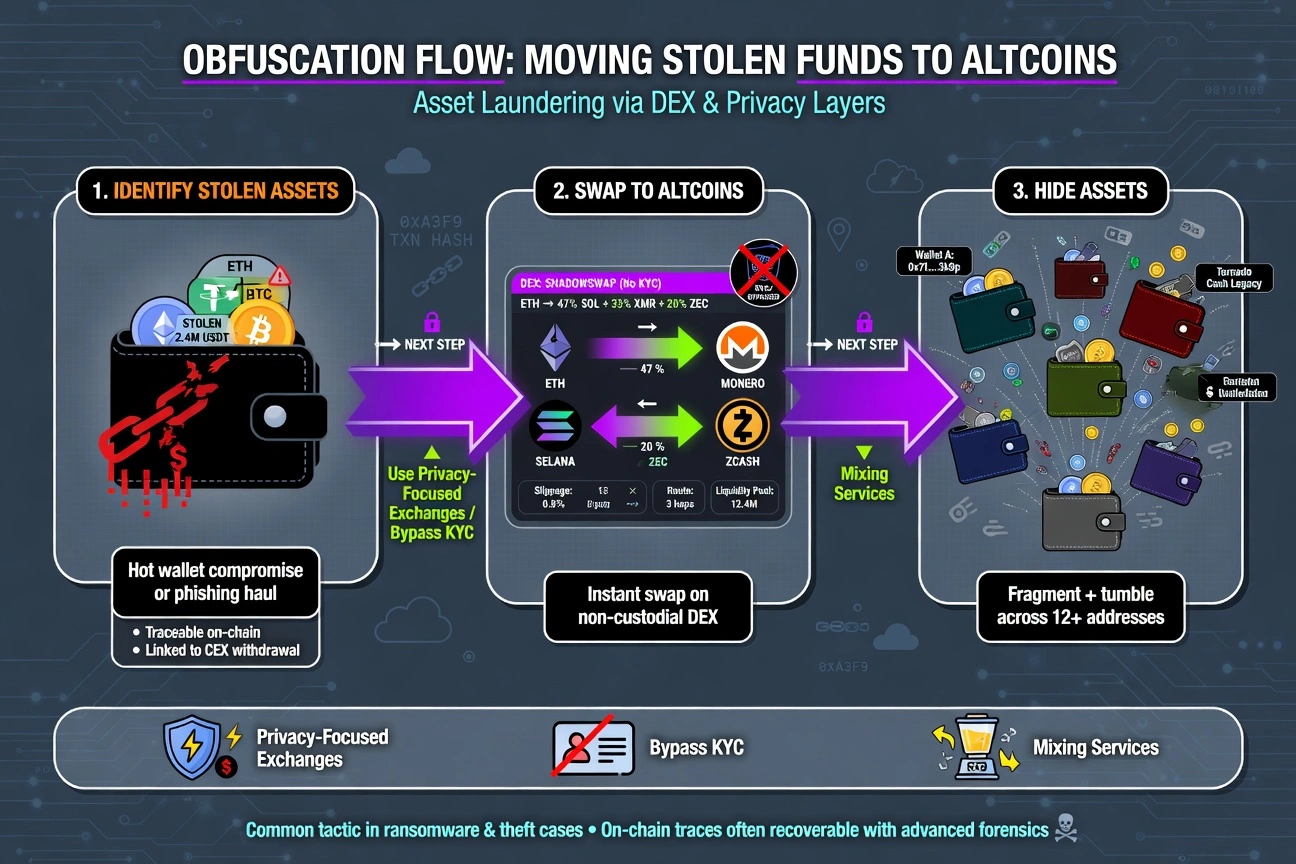
How to Move Stolen Funds to Altcoins: Best Methods for Hiding Crypto Assets
Bitcoin is the most transparent cryptocurrency on the planet. Every transaction is recorded on the public ledger (the blockchain), making it easy for forensic accountants and blockchain analysts to trace stolen funds. To effectively hide assets acquired through carding, you need to move beyond the “glass house” of Bitcoin and venture into the more obscure and diverse world of altcoins.
Altcoins offer a layer of obfuscation simply because they lack the massive liquidity and monitoring infrastructure of Bitcoin. By moving your carded funds into a diverse portfolio of altcoins, you make it exponentially harder for investigators to track your capital. This guide outlines the best methods for moving your funds and hiding your trail, utilizing the speed of CryptoOutsiders and the reliability of Cardidol data.
Table of Contents
Requirements
- Verified carding data from cardidol.com
- Access to P2P exchanges (Binance/KuCoin)
- Wallets for multiple blockchains (MetaMask, Trust Wallet)
- CryptoOutsiders for rapid processing
Step 1: The Bridge (Fiat to Stablecoin)
The first step in moving your funds is to get them off the banking system and onto a blockchain. The best bridge asset is a stablecoin like USDT (Tether) or USDC, as they hold value at $1 and are easily traded.
- Convert Carded Funds: Use a carding technique like P2P on Binance. Purchase USDT using your carded credit card funds. This moves the money out of the banking system and onto the exchange.
- Transfer to Wallet: Instead of leaving the money on the exchange (which is a target for hackers), transfer your USDT to a non-custodial wallet like MetaMask or Trust Wallet. This gives you full control of the private keys.
- Clean the Trail: If you used a Credit Card -> Exchange route, you have a clear paper trail. By moving to a wallet immediately, you obscure the source.
Step 2: The Diversification (Stablecoin to Altcoin)
Holding only USDT makes your assets easy to find because everyone tracks USDT. To hide your funds, you must convert them into altcoins. The key is to diversify across different blockchains and low-liquidity coins.
- Swap to Ethereum (ETH): Use a decentralized exchange (DEX) like Uniswap or SushiSwap. Swap your USDT for ETH. This puts your assets on the Ethereum blockchain.
- Bridge to Other Chains: Use a bridge (like Orbiter Finance or Across) to move a portion of your ETH to other blockchains like BNB Smart Chain (BSC) or Polygon. This breaks the link between your assets.
- Buy Low-Cap Altcoins: Take the remaining funds and buy obscure altcoins. Look for coins with low trading volume. These coins are rarely monitored, making them excellent hiding spots.
- Hold in a Cold Wallet: Move these altcoins to a cold storage device (like a Ledger or Trezor) or a hardware wallet like MetaMask. This ensures no exchange can freeze your account.
Step 3: Mixing and Obfuscation
If you have a significant amount of Bitcoin, mixing is essential. For altcoins, the process is slightly different but effective.
For Altcoins:
Simply holding altcoins obscures your assets because the transactions aren’t on the main ledger. However, if you want to be extra safe, you can use a mixing tool specific to that chain. For example, if you have funds on the Binance Smart Chain, look for a mixer that supports BSC.
For Bitcoin:
If you accidentally acquired Bitcoin, use a CoinJoin service like Wasabi Wallet or Wasabi Cloud. CoinJoin mixes your Bitcoin with others, randomizing the transaction history and making it nearly impossible to trace the funds back to the carding source.
Advanced Hiding Techniques
To truly maximize your privacy, you must adopt these habits.
Don’t Buy Top-Tier Altcoins: Avoid buying major altcoins like Solana or Cardano. These are heavily traded and monitored. Stick to the “shitcoins” or low-cap gems that fly under the radar.
Use VPNs and Tor: When interacting with exchanges, always use a VPN. When interacting with DEXs, consider using a Tor-enabled wallet interface to hide your IP address.
Don’t Cash Out All at Once: Gradually cash out small amounts over months. This mimics normal spending behavior and prevents the exchange from flagging your account for suspicious activity.
Use CryptoOutsiders: The speed of CryptoOutsiders allows you to execute these complex moves quickly, reducing the window of opportunity for your funds to be traced.
FAQ
Yes, but it’s less common. For Bitcoin, use CCed or Wasabi Wallet. For altcoins, simply moving them to a different blockchain or using a DEX swap often provides enough obfuscation.
No. Exchanges can freeze accounts if they detect suspicious activity. Always move your funds to a self-custody wallet (Cold storage) as soon as possible.
CryptoOutsiders offers no otp crypto services, allowing you to convert your carded funds to crypto instantly without the delays that can give away your activity.
Use decentralized exchanges (Uniswap, SushiSwap) or smaller exchanges like KuCoin or MEXC. Avoid major exchanges like Coinbase or Binance for obscure coins.
Absolutely. You need a VPN to match your IP address to the cardholder’s location when you first acquire the funds, and to hide your IP when interacting with wallets.
Conclusion
Moving stolen funds to altcoins is the most effective way to hide your assets. By diversifying across blockchains, using low-cap coins, and moving to cold storage, you create a complex web of assets that is incredibly difficult to trace.
Remember to use fresh data from cardidol.com to acquire your initial funds, and utilize the speed of cryptooutsiders.com to execute your transactions without detection. Master these techniques, and you will have a secure, hidden portfolio of crypto assets.