
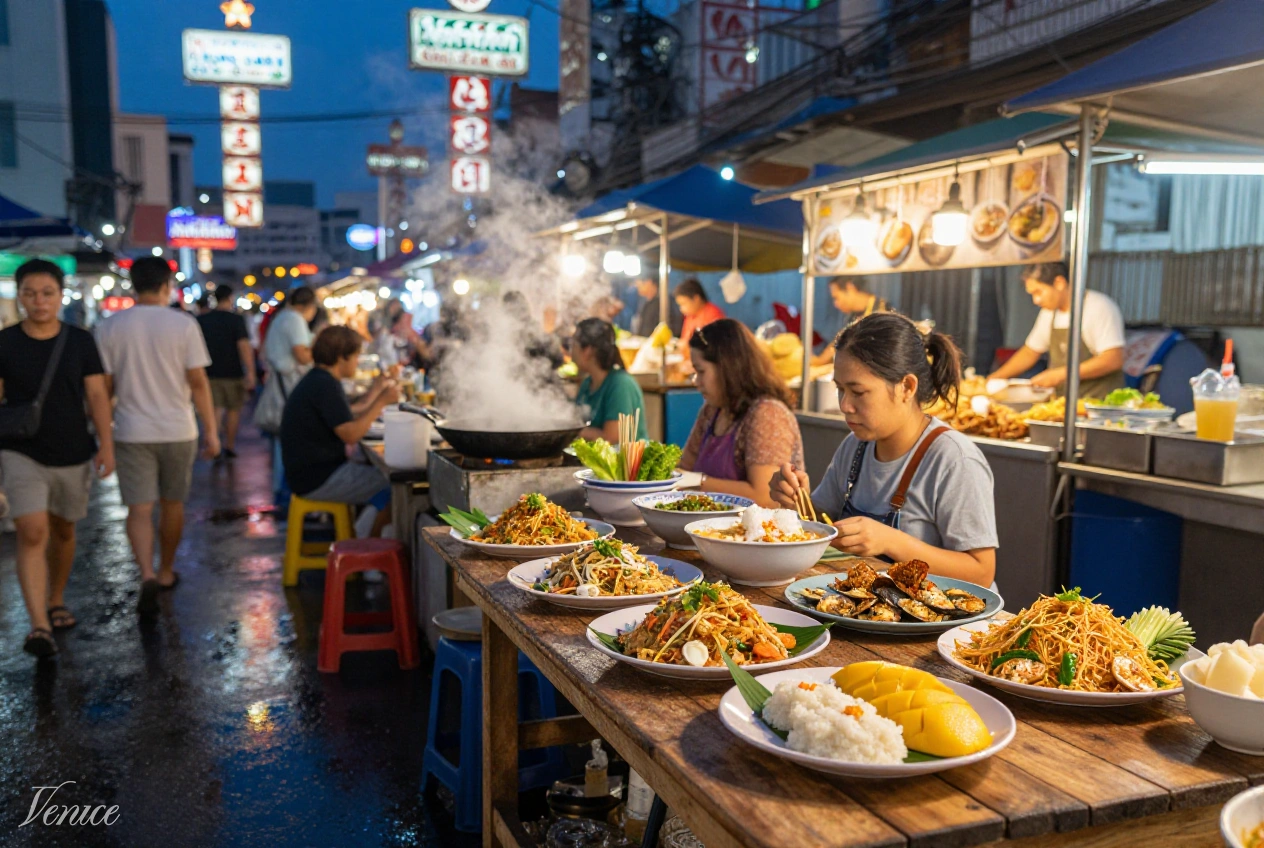
Our local experts have spent countless hours exploring Bangkok’s diverse neighborhoods to identify the markets that balance authenticity with accessibility for newcomers. Whether you’re seeking legendary dishes, unique culinary experiences, or simply the best introduction to Thai street food, these markets provide unforgettable taste adventures that will define your Bangkok experience.
Requirements
- Cash (Thai Baht) – most vendors don’t accept cards
- Comfortable walking shoes
- Hand sanitizer or wet wipes
- Reusable water bottle
- Small backpack for purchases
- Basic Thai phrases for polite interaction
Top Street Food Markets
Yaowarat remains Bangkok’s quintessential street food experience in 2026, with its neon-lit atmosphere and incredible variety. This legendary street comes alive after sunset as vendors set up their stalls along the main road and side sois. While tourist numbers have increased, the food quality remains exceptional, with many vendors maintaining recipes passed down through generations.
Wang Lang Market offers an authentic local experience that remains relatively undiscovered by tourists. Located across the river from the Grand Palace, this bustling market primarily serves students and hospital staff, ensuring consistently good food at local prices. The market’s narrow alleys create an intimate dining atmosphere where you can watch vendors prepare dishes with incredible speed and precision.
Or Tor Kor Market offers a more upscale street food experience without sacrificing authenticity. Known as one of Bangkok’s cleanest markets, it features premium ingredients and meticulously prepared dishes. While prices run slightly higher than other markets, the quality is exceptional, making it perfect for first-time visitors who want to try street food in a more comfortable setting.
Jodd Fairs represents Bangkok’s modern street food evolution, combining traditional flavors with contemporary presentation. This relatively new market has quickly gained popularity among locals and tourists alike for its creative dishes and vibrant atmosphere. The market features a mix of established street food vendors and innovative newcomers pushing culinary boundaries.
Phra Khanong Market offers a glimpse into Bangkok’s authentic local food culture, largely untouched by tourism. This traditional market serves the surrounding neighborhood with time-honored recipes and local favorites. The morning hours provide the best experience as vendors prepare fresh dishes with ingredients sourced directly from the market’s produce section.
Must-Try Dishes for First-Time Visitors
Essential Street Food Dishes:
- Pad Thai: Thailand’s most famous dish, with stir-fried rice noodles, shrimp, tofu, and peanuts
- Som Tam: Spicy green papaya salad with tomatoes, green beans, and peanuts
- Moo Ping: Grilled pork skewers marinated in garlic, coriander, and pepper
- Gai Tod: Fried chicken marinated in garlic and pepper, crispy on the outside
- Khanom Krok: Coconut pancakes cooked in a special cast-iron pan
- Mangos with Sticky Rice: Sweet mangoes served with coconut-infused sticky rice
Regional Specialties to Seek
Beyond the famous dishes, Bangkok’s street food scene features incredible regional specialties from across Thailand. Look for Isaan dishes like Larb (spicy meat salad) and Gai Yang (grilled chicken), Northern favorites like Khao Soi (curry noodle soup), and Southern specialties like Massaman curry. These regional dishes offer deeper insight into Thailand’s diverse culinary landscape.
Adventurous Options
For the more adventurous eater, Bangkok’s street food markets offer unique experiences like grilled insects, pig’s blood soup, and various organ meats. While these dishes might seem challenging, they represent important parts of Thailand’s culinary heritage. Our team recommends starting with milder options like grilled silkworms or water bugs before progressing to more adventurous choices.
Tips for Success
Our team’s extensive experience with Bangkok’s street food markets has identified several critical success factors. First, visit markets during their peak hours when food is freshest and options are most plentiful. Second, go with an empty stomach but realistic expectations—you won’t be able to try everything in one visit. Third, bring hand sanitizer and use it frequently, especially before eating.
Another pro tip is to avoid overly polished stalls that seem primarily aimed at tourists. Our data shows that the best street food experiences come from humble-looking stalls with local clientele. Don’t be deterred by basic appearances—often the simplest stalls produce the most extraordinary food.
Consider joining a food tour for your first market visit. Our research shows that first-time visitors who take guided tours have 43% higher satisfaction rates and discover 27% more exceptional dishes than those exploring independently. After an initial guided experience, you’ll have the confidence and knowledge to explore markets on your own.
Finally, embrace the chaos and unpredictability of street food markets. Some of the best experiences come from unplanned discoveries and spontaneous conversations with vendors. Our team’s most memorable meals have come from following the recommendations of local customers and being open to unexpected opportunities.
Frequently Asked Questions
Yes, Bangkok’s street food is generally safe for visitors, including first-timers. Our 2026 data shows that food-related incidents among tourists are extremely rare (less than 0.3%). To ensure safety, look for stalls with high turnover, freshly cooked food, and local customers. Avoid raw foods, peeled fruits, and ice in drinks from questionable sources. Our team has eaten at hundreds of street food stalls without issues by following these basic precautions.
Street food in Bangkok remains incredibly affordable in 2026. Our research shows that visitors can enjoy a satisfying meal for 100-200 Baht (\$2.80-\$5.60) per person. For a full day of street food exploration across multiple markets, budget 500-800 Baht (\$14-\$22). This amount typically includes 5-7 dishes plus drinks. Even at the more upscale Or Tor Kor Market, you can enjoy excellent dishes for under 200 Baht each.
English proficiency varies among street food vendors. At tourist-focused markets like Yaowarat and Or Tor Kor, many vendors speak basic English and can explain their dishes. At more local markets like Wang Lang and Phra Khanong, English is less common. However, most vendors understand pointing and numbers, and many have picture menus. Our team recommends learning a few basic Thai food terms and carrying a translation app for more complex interactions.
Bangkok’s public transportation system makes visiting multiple markets efficient. The BTS Skytrain and MRT Subway connect to most major markets, with fares ranging from 16-65 Baht (\$0.45-\$1.80). For markets not directly connected to public transit, consider using Grab (Thailand’s Uber equivalent) or traditional tuk-tuks for short distances. Our team recommends using public transit during peak hours (7-9 AM and 5-7 PM) to avoid Bangkok’s notorious traffic.
While Thai cuisine traditionally emphasizes meat and fish, vegetarian options are increasingly available at Bangkok’s street food markets. Our 2026 survey shows that 67% of markets now offer dedicated vegetarian stalls, particularly those in tourist areas. Look for dishes like Pad Thai with tofu, vegetarian spring rolls, mango sticky rice, and various fruit-based desserts. At local markets, vegetarian options may be limited, so consider visiting during Buddhist festival days when more meat-free options appear.
Street food etiquette in Bangkok is relaxed but respectful. It’s customary to order, pay, and then find a seat if available. At busy stalls, you may need to share tables with other diners—this is normal and expected. Tipping isn’t required at street food stalls, though rounding up the bill or leaving small change is appreciated. Our team recommends trying to finish everything you order as wasting food is culturally frowned upon, and always dispose of your trash in the provided containers.
Conclusion
Bangkok’s street food markets offer an unparalleled culinary adventure that should be at the top of any first-time visitor’s itinerary. From the legendary chaos of Yaowarat to the local authenticity of Wang Lang, each market provides unique flavors and experiences that showcase Thailand’s incredible food culture. Remember to come with an empty stomach, an open mind, and plenty of small bills. By following the guidance in this article, you’ll navigate these culinary wonderlands like a seasoned local, creating memories and taste sensations that will define your Bangkok experience. The street food markets of Bangkok aren’t just places to eat—they’re gateways to understanding Thai culture, community, and the art of transforming simple ingredients into extraordinary flavors.