
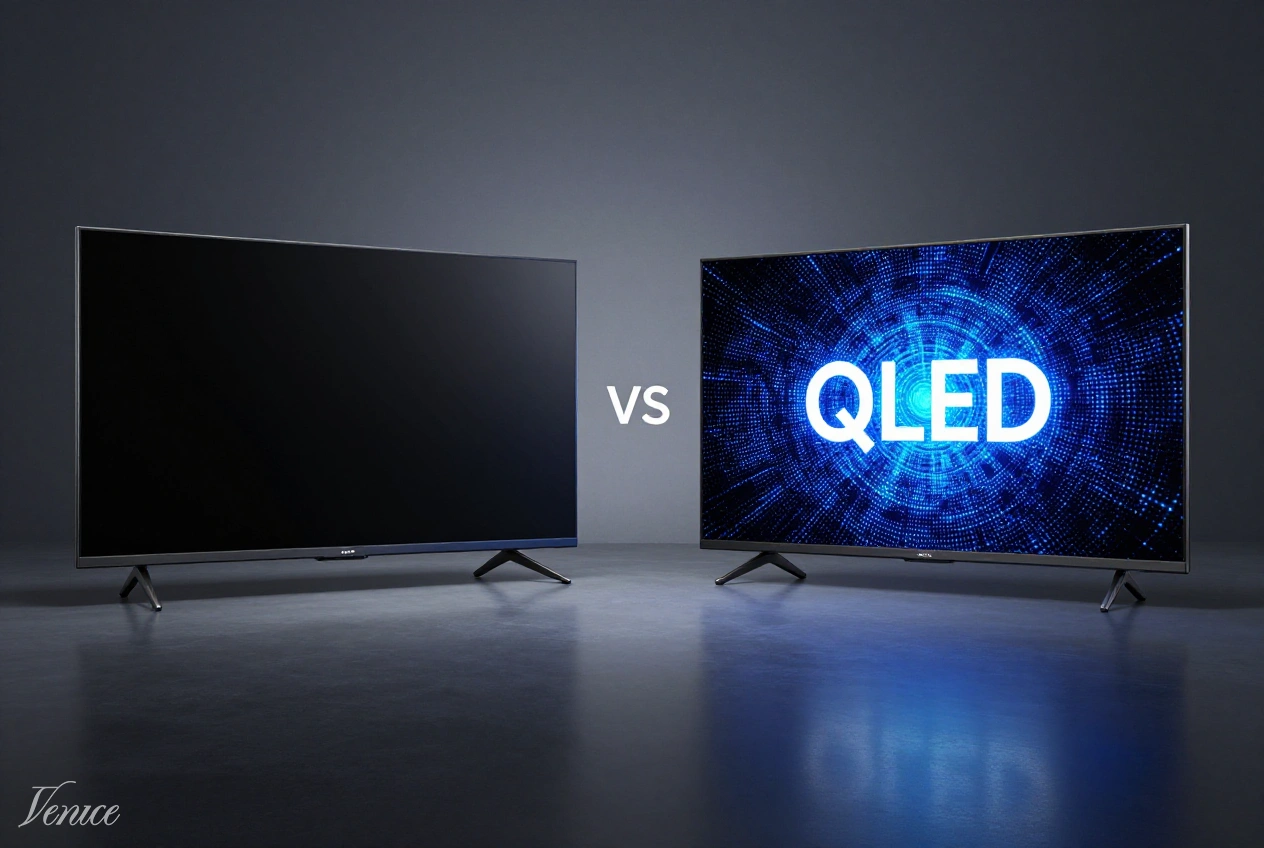
The television market has evolved significantly over the past few years, with OLED and QLED emerging as the two dominant premium display technologies. As we navigate through 2026, consumers face an increasingly complex decision when choosing between these technologies. Both have matured considerably, addressing many of their initial weaknesses while enhancing their respective strengths.
This comprehensive comparison examines the current state of OLED and QLED technologies, evaluating them across multiple factors including picture quality, longevity, pricing, and overall value proposition. Whether you’re a movie enthusiast, sports fan, or casual viewer, understanding the differences between these technologies will help you make an informed decision that aligns with your viewing preferences and budget.
Table of Contents
Viewing Requirements
- Room lighting conditions (bright vs. controlled environments)
- Primary content types (movies, sports, gaming, regular TV)
- Budget constraints and long-term value expectations
- Viewing angles and seating arrangement in your room
- Concerns about screen burn-in and longevity
Technology Comparison
Picture Quality and Contrast
OLED (Organic Light-Emitting Diode) technology continues to lead in contrast performance due to its ability to turn individual pixels completely off. This results in true black levels that no LCD-based technology can match. The perfect black levels create an infinite contrast ratio that gives content a three-dimensional quality, particularly noticeable in dark scenes from movies and TV shows.
QLED (Quantum Dot LED) TVs have made significant strides in contrast performance through improved local dimming technologies. High-end QLED models now feature hundreds of dimming zones that can more precisely control light output, narrowing the gap with OLED. However, even the best QLEDs still produce some light bleed in dark scenes, resulting in slightly grayish blacks compared to OLED’s perfect blacks. For viewers who prioritize cinematic contrast, OLED maintains its advantage in 2026.
Brightness and HDR Performance
QLED TVs continue to dominate in peak brightness capabilities, with premium models reaching over 2000 nits in highlight areas. This exceptional brightness makes QLEDs particularly well-suited for bright rooms and HDR content that relies on specular highlights. The Quantum Dot technology also allows for more vibrant color reproduction at high brightness levels, creating a more impactful HDR experience.
OLED brightness has improved with each generation, with 2026 models reaching approximately 900-1000 nits in highlight areas. While this is a significant improvement over earlier OLEDs, they still can’t match the peak brightness of the best QLEDs. However, OLEDs maintain more consistent brightness across the screen, whereas some QLEDs can exhibit brightness uniformity issues. For viewers in bright rooms or those who prioritize eye-popping HDR highlights, QLED remains the brighter choice.
Color Accuracy and Volume
Both technologies have achieved exceptional color accuracy, with premium models from both camps capable of producing nearly the entire DCI-P3 color space used in cinema. OLEDs typically offer slightly better color accuracy out of the box due to their emissive nature, which eliminates the color shifts that can occur with LCD backlight systems.
QLEDs maintain an advantage in color volume, which is the combination of color saturation and brightness. The Quantum Dot technology allows QLEDs to maintain color saturation at higher brightness levels better than OLEDs, which can experience some color desaturation at peak brightness. For content that relies on bright, saturated colors, QLEDs often deliver a more impactful presentation, though the difference is subtle on premium models from both technologies.
Viewing Angles and Uniformity
OLED technology continues to offer superior viewing angles, with minimal color and contrast shift even at extreme off-axis positions. This makes OLEDs ideal for rooms with wide seating arrangements where viewers will be watching from various angles. OLED screens also maintain perfect uniformity across the entire panel, with no backlight-related issues like clouding or blooming.
QLED viewing angles have improved significantly with the adoption of better panel technologies like VA and IPS panels. However, they still can’t match OLED’s near-perfect off-axis performance. Some QLED models may experience color shifts or contrast reduction when viewed from the side. Additionally, QLEDs can exhibit uniformity issues like backlight clouding or flashlighting, particularly in dark scenes. For viewers with wide seating arrangements or those sensitive to screen uniformity, OLED maintains a clear advantage.
Motion Handling and Gaming Performance
Both technologies have made significant strides in motion handling, with premium models from both camps offering excellent performance for sports and gaming. OLEDs typically have slightly faster response times, resulting in less motion blur during fast-moving scenes. The pixel-level control of OLED technology also eliminates the backlight-related motion artifacts that can affect some QLEDs.
QLEDs have implemented various motion processing technologies that have narrowed the gap with OLEDs. High-end QLED models now feature excellent response times and effective motion processing that minimizes blur. For gaming, both technologies offer low input lag and high refresh rates, though OLEDs maintain a slight advantage in response time. For competitive gamers where every millisecond counts, OLED may have a small edge, but most viewers will be satisfied with the motion performance of either technology.
Longevity and Burn-in Concerns
Burn-in remains a concern with OLED technology, though manufacturers have implemented various mitigation strategies that have significantly reduced the risk. Modern OLEDs include pixel shifting, screen savers, and logo dimming features that help prevent static images from causing permanent damage. While the risk of burn-in has decreased, OLEDs still require more care than QLEDs, particularly for users who watch content with static elements for extended periods.
QLEDs don’t suffer from burn-in since they use LCD technology with a separate backlight. This makes them more suitable for applications involving static images like PC monitoring or news channels with tickers. QLEDs also typically maintain their brightness longer than OLEDs, which can experience gradual brightness degradation over time. For users who prioritize longevity and worry about burn-in, QLED remains the more durable option.
Pricing and Value Proposition
The price gap between OLED and QLED has narrowed significantly in 2026, with both technologies now available at various price points. Premium OLED models typically command a slight price premium over comparable QLEDs, though this varies by screen size and feature set. The introduction of mid-range OLED models has made the technology more accessible to budget-conscious consumers.
QLEDs continue to offer better value at larger screen sizes, with 75-inch and 85-inch models generally more affordable than their OLED counterparts. The value proposition of each technology depends on your priorities: if you prioritize perfect blacks and viewing angles, OLED’s slight premium may be justified. If peak brightness and larger screen sizes are more important, QLED often provides better value. Consider your specific needs and budget when evaluating the value proposition of each technology.
Value Optimization
To maximize the value of your TV purchase regardless of technology, consider these optimization strategies:
- Wait for seasonal sales when premium models often see significant discounts
- Consider previous generation models that offer similar performance at reduced prices
- Prioritize screen size over premium features if your viewing distance is significant
- Invest in proper calibration to get the most out of whichever technology you choose
- Consider the total cost of ownership, including potential energy consumption differences
Remember that the “best” technology depends on your specific viewing habits and environment. Before making a purchase, try to view both technologies in person if possible, ideally in conditions similar to your home viewing environment. Pay attention to factors like room lighting, viewing angles, and the types of content you watch most frequently.
Finally, consider the ecosystem and smart features of each TV, as these can significantly impact your day-to-day experience. Both OLED and QLED TVs are available from various manufacturers, each with their own smart platforms and feature sets. Choose a brand whose ecosystem aligns with your preferences and existing devices to ensure a seamless user experience.
Frequently Asked Questions
QLED TVs generally perform better in bright rooms due to their higher peak brightness and anti-reflective screen coatings. The superior brightness of QLEDs helps combat glare and maintains image visibility in well-lit environments. While OLEDs have improved their brightness and anti-reflective properties, they can still appear somewhat dim compared to QLEDs in very bright rooms. If your TV will be placed in a room with significant ambient light or large windows, a QLED model would likely be the better choice.
Burn-in risk has been significantly reduced in modern OLED TVs through various mitigation technologies, but it hasn’t been completely eliminated. Manufacturers have implemented features like pixel shifting, automatic brightness limiting for static images, and screen savers that activate during idle periods. For typical viewing habits including mixed content, the risk of burn-in is minimal. However, if you primarily watch content with static elements like news channels or use the TV as a computer monitor for extended periods, a QLED might still be the safer choice.
For movie enthusiasts, OLED TVs generally offer better value due to their superior contrast ratios and perfect black levels. The ability of OLED pixels to turn completely off creates a more cinematic experience, particularly for dark scenes in films. While high-end QLEDs have narrowed the gap with improved local dimming, they still can’t match OLED’s perfect blacks. If you primarily watch movies in a dim or dark room, the slightly higher price of OLED is often justified by the superior cinematic experience it provides.
Both technologies offer sufficient longevity for most consumers, with typical lifespans of 7-10 years or more under normal viewing conditions. OLEDs may experience gradual brightness degradation over time, though this is usually minimal and often goes unnoticed by viewers. QLEDs maintain their brightness longer but may experience backlight-related issues sooner. The actual lifespan depends heavily on usage patterns and settings. Using features like automatic brightness limiting and avoiding static images can extend the life of either technology. For most users, both technologies will provide satisfactory performance for many years before replacement becomes necessary.
Both OLED and QLED TVs offer excellent gaming performance in 2026, with premium models from both technologies featuring low input lag, high refresh rates, and variable refresh rate support. OLEDs typically have slightly faster response times, resulting in marginally less motion blur, which can be advantageous for competitive gaming. However, QLEDs often maintain their image quality better during extended gaming sessions with static HUD elements. For most gamers, the choice between technologies comes down to personal preference regarding contrast versus brightness, as both offer excellent gaming experiences.
Energy consumption varies between the technologies depending on content type. OLEDs are generally more efficient when displaying dark content since pixels can turn completely off, but they consume more power than QLEDs when displaying bright scenes. QLEDs have relatively consistent power consumption regardless of content type since the backlight is always on. For typical mixed content viewing, the energy differences are relatively minimal and shouldn’t be a major factor in your decision. If energy efficiency is a primary concern, look for models with energy-saving features regardless of technology.
Conclusion
As we’ve examined throughout this comparison, both OLED and QLED technologies have matured significantly in 2026, each offering compelling advantages for different types of viewers. OLED continues to lead in contrast, viewing angles, and uniformity, making it ideal for movie enthusiasts and those who prioritize perfect black levels. QLED maintains advantages in brightness, color volume, and longevity, making it better suited for bright rooms and viewers concerned about burn-in.
The choice between these technologies ultimately comes down to your specific viewing habits, environment, and priorities. If you watch primarily in a dim room and value cinematic contrast, OLED’s slight premium is likely justified. If you watch in a bright room, prioritize peak brightness, or are concerned about burn-in, QLED offers better value. The good news is that both technologies provide exceptional picture quality that will satisfy most viewers.
As both technologies continue to evolve, the differences between them are becoming increasingly subtle. Rather than focusing on which technology is “better,” consider which one aligns with your specific needs and viewing preferences. By evaluating your priorities and following the guidance in this comparison, you can make an informed decision that will provide years of enjoyable viewing regardless of which technology you choose.